

12 Australian native plants for the understorey of your garden
An understorey is the layer of plants that grows beneath and between the taller ones. Many home gardens skip it and leave bare mulch, gravel or lawn between the trees and shrubs. That bare ground is where a garden loses the most water, grows the most weeds and offers wildlife the least. Filling it with low, tough natives goes a long way towards fixing all three.

1. It keeps weeds down
A dense low layer fills the space and shades the surface, which leaves little light or room for weed seedlings.
2. It cools the ground and cuts watering
Bare soil heats up and dries out fast. Foliage shades the soil, which keeps it cooler and slows evaporation, so established plants need less watering. Roots and leaf cover also hold the surface together when heavy rain falls.

3. It feeds and shelters wildlife
Tussocks and dense low plants give insects food, shelter and places to lay eggs. Those insects become food for the lizards, frogs and birds that live at ground level.

Blue-tongue lizards are a good example. They shelter among litter, rocks and logs and eat unwanted snails, slugs and caterpillars. A garden that gives them cover with a planted understorey gets free pest control.
Shop Tools for Australian Gardeners
Everything you need in your garden.


Choosing plants for each position
The 12 suggested plants below are grouped by where they grow best.
Under trees
Conditions under trees are the hardest in the garden: low light, roots that take most of the water and a layer of leaf litter. Choose plants that tolerate shade and compete well for moisture. For a eucalypt-specific list, see our guide to plants under eucalyptus trees.
Climbing saltbush (Chenopodium nutans)
Climbing saltbush is one of the few plants that copes with dry shade, which makes it useful under established trees where roots take most of the moisture. It forms a soft mound of small arrowhead-shaped leaves, or scrambles up to about a metre if there is a log, rock or shrub to climb. It is still widely sold as Einadia nutans.

Tiny red to orange berries appear from summer into autumn and are taken by birds. The caterpillars of the saltbush blue butterfly (Theclinesthes serpentata) also feed on it.

Geoffrey Cox, CC BY 4.0, via Wikimedia Commons
Blueberry lily (Dianella caerulea)
Blueberry lily is one of the most dependable plants for under trees. Strappy leaves form a clump that spreads slowly by underground stems. Small blue-violet flowers in spring and summer give way to blue berries in autumn. It is hardy across a wide range of climates and soils and tolerates frost.

Macleay Grass Man, CC BY 2.0, via Wikimedia Commons
The dense clumps give ground-dwelling animals cover at the base of the plant. The berries are regarded as potentially toxic, so keep that in mind if small children use the garden.
Shop Blueberry LilyThis is an affiliate link to Nursery Near Me. We earn a commission if you buy through it. Find out more >
Kidney weed (Dichondra repens)
Kidney weed is a low, creeping groundcover with small kidney-shaped leaves that form a dense, evergreen mat. It grows in anything from full sun to about 80 per cent shade, which suits the dim spots under trees and shrubs where little else will cover the ground. It is also used as a soft lawn alternative where grass struggles.

It spreads by creeping stems that put down roots as they go, so it can move into lawn and adjoining beds. Give it a clear edge and trim stray runners with sharp snips. It prefers moist, lightly shaded soil but copes with dry spells once established. It tolerates light foot traffic but not heavy wear. In frosty areas it may die back in winter and recover in spring.
Weeping grass (Microlaena stipoides)
Weeping grass is a soft, fine-leaved grass that stays green through the year and copes with the part shade under trees better than most grasses. It grows in loose tufts and spreads slowly by short underground stems, so it fills gaps without forming a hard mat. Its seeds feed seed-eating birds and its leaves feed the caterpillars of the common brown butterfly.

Harry Rose from South West Rocks, Australia, CC BY 2.0, via Wikimedia Commons
It prefers moist, well-drained soil but tolerates dry spells and frost once established. It can move into adjoining beds, so slice a clean edge around it with a planting knife.

A note on planting under trees
Use tubestock rather than large pots. Small plants need small holes, so you can plant between roots with a planting knife without cutting them and they usually establish well. Water through the first summer, even for drought-tolerant plants.
Under shrubs
Conditions under shrubs are milder than under trees. The root zone is more sheltered, light reaches the ground from the sides and the lower branches give protection from sun and wind. Choose plants that sit below the lowest branches or tuck in beneath them and leave a little room so air can move through.
Native fuchsia (Correa reflexa 'Trixibelle'™)
'Trixibelle'™ is a low, mounding selection of native fuchsia that spreads to cover the ground beneath taller shrubs. Pink bells with green tips hang through the cooler months when little else is in flower and attract honeyeaters and other small nectar-feeding birds. The dense low growth also gives smaller birds cover to shelter in.

It tolerates drought and light frost once established. A light prune after flowering with sharp secateurs keeps it dense. Quoted sizes vary between suppliers, from about 50cm by 2m to 80cm by 1m, so leave room for it to spread.
Shop Native FuchsiaShown as 'Trixibelle'™, a compact, low-mounding Correa reflexa selection. This is an affiliate link to Nursery Near Me. We earn a commission if you buy through it. Find out more >
Common tussock-grass (Poa labillardierei)
Common tussock-grass is the classic grassy understorey plant of south-eastern Australia and one of the best for wildlife. The dense tussocks give cover to insects, lizards and ground-feeding birds. The leaves also feed the caterpillars of several native butterflies.

It reaches about a metre, so use it among medium to large shrubs and leave space around it. Seedlings need moist soil to establish, so water well through the first summer. Shear it back hard in late winter to refresh it.
Ruby saltbush (Enchylaena tomentosa)
Ruby saltbush is a tough, low, spreading shrub with soft grey-green leaves covered in fine white hairs. Small berries ripen from green through yellow to red and are eaten by native birds, lizards and small native mammals. It grows in every mainland state, from coastal dunes to dry inland country, which makes it one of the most adaptable plants on this list.

Melburnian, CC BY-SA 3.0, via Wikimedia Commons
It needs well-drained soil and does best in sun to part shade. It is drought tolerant and frost hardy and responds well to pruning with sharp secateurs. Waterlogged soil is the usual cause of failure, so avoid mulching right up to the stem.
A fact about ruby saltbush
The berries of ruby saltbush are edible. They taste salty and sweet and were eaten raw by Aboriginal people. A single plant often carries green, yellow and red berries at the same time.
Wrinkled kerrawang (Commersonia hermanniifolia)
Wrinkled kerrawang is a low, trailing shrub with deeply wrinkled dark green leaves. In spring, pink-tinged buds open into small white star-like flowers that fade to pink with a red centre. Red capsules follow from late November. It is still widely sold under its old name, Rulingia hermanniifolia.

It forms a dense mound that follows contours and crevices, which suits the edge of a shrub bed or a bank under open canopy. It does best in sun to part shade and grows sparser in heavy shade. It needs good drainage. It tolerates drought and frost and responds well to pruning.

Across open ground
Open ground is where an understorey matters most and gets planted least. Lawn, bare mulch and gravel all leave the soil exposed. Low grasses and groundcovers keep the surface covered and give ground-dwelling animals somewhere to move through. These plants prefer sun, though most tolerate light shade. For more compact options, see our groundcover guide.
Blue devil (Eryngium ovinum)
Blue devil forms a spiky clump of narrow, bluish leaves. In summer it sends up branching stems crowded with bright metallic blue flower heads, which stand out against soft grasses and everlastings. It grows naturally in temperate grassy woodlands and grasslands, so it suits the open ground between larger plants.

Macleay Grass Man, CC BY 2.0, via Wikimedia Commons
It needs full sun and well-drained soil and tolerates heavy frost and long dry spells. It develops a good-sized taproot, so plant it where you want it with a hand trowel and avoid moving it later. The plant dies back in autumn and re-emerges in late winter, so mark its position to avoid digging it up. Bees and other insects visit the flowers. The leaves are spiny, so keep it away from paths and play areas.
Supple spear-grass (Austrostipa mollis)
Supple spear-grass forms a tufted clump of fine leaves topped by dense, fluffy seed heads from spring into summer. Those flower stems rise to about 1.2m, so it adds height and movement over low groundcovers. Native butterfly caterpillars feed on it. It also gives small birds and lizards food and cover.

Macleay Grass Man, CC BY 2.0, via Wikimedia Commons
It is frost tolerant and copes with moist to dry soils in sun or part shade. The seeds have sharp, bent awns that can catch in fur, so plant it away from paths and areas where pets push through. Cutting it back hard in mid to late autumn with sharp snips refreshes it.
Common everlasting (Chrysocephalum apiculatum)
Common everlasting is a hardy, spreading perennial with silvery foliage and masses of small yellow button flowers from spring into autumn. Its height depends on the form, which can vary from a few centimetres in full sun to around 50cm in shade.

It is native to grassland and woodland across Australia and is a food plant for butterflies, including the Australian painted lady. A hard prune with sharp pruners rejuvenates old plants.
Wattle mat-rush (Lomandra filiformis subsp. filiformis)
Wattle mat-rush is a small, tufted, grass-like perennial with fine, stiff blue-green leaves. In spring and early summer it carries cream to yellow flower spikes that look like small wattle buds, which is where the common name comes from. It grows in open forest and woodland, so it suits the gaps between larger plants and the edges of beds.

John Tann from Sydney, Australia, CC BY 2.0, via Wikimedia Commons
It grows in full sun or part shade and is very drought and frost tolerant once established. It is a food plant for the caterpillars of native butterflies and moths and gives small creatures cover at the base of the tuft. Trim tattered leaf tips with small snips when the foliage browns.
Putting it together
The plants do most of the work, but a few simple additions make an understorey far better for wildlife and far better at cooling the ground.
1. Add water. A shallow dish or bird bath with stones or a stick for landing gives birds, lizards and insects somewhere to drink. Set it beside a clump of tussock-grass or saltbush so small animals can reach it under cover and keep it clean and topped up.

2. Add logs and rocks. Blue-tongues and other skinks shelter under large objects on the ground. A log or flat rock between plants also gives them somewhere to bask.

3. Keep the leaf litter. Fallen leaves under trees and shrubs help keep the soil damp and give skinks and insects somewhere to hide, so leave them where they fall.
4. Leave gaps. Plant in drifts with some open ground between patches so animals can move through the layer and bask in the sun.
5. Skip snail bait and insecticides. Blue-tongues eat poisoned snails and slugs and can be poisoned themselves. Chemicals used by neighbours can reach them too.

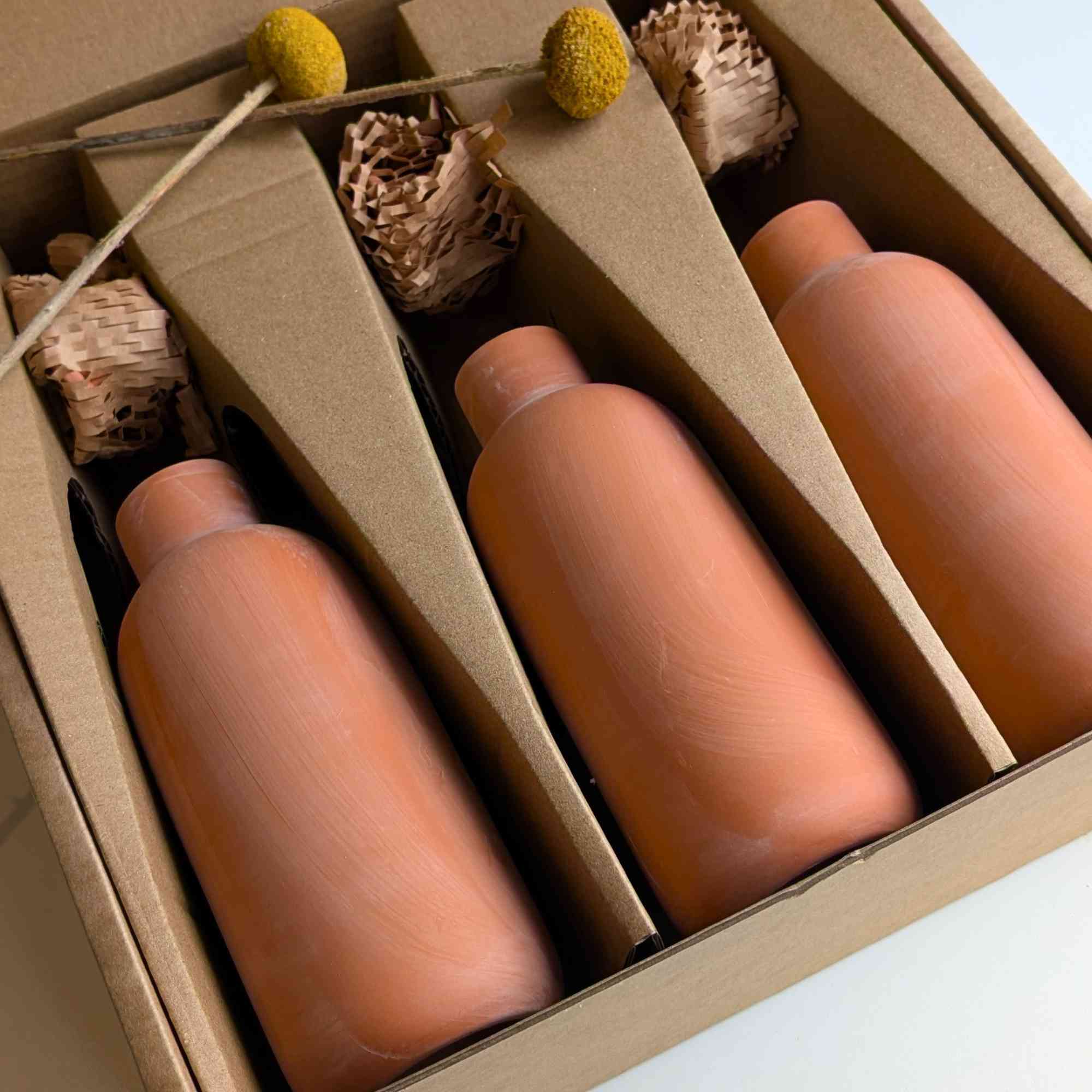
Together these turn a planted bed into a cool, sheltered patch of ground. The plants shade the soil, the logs and leaves help hold moisture and the water draws animals in. Once the layer closes over, it should need less watering than bare mulch or lawn and it gives wildlife somewhere to shelter on hot days. Until then, mulch the gaps lightly and keep new plants watered, ideally with a terracotta olla beside each one. You do not need to plant a whole garden at once. A single bed under one tree is enough to see the difference.

keep reading
A Guide to Australian Native Gardening
How to plan, plant and care for a thriving native garden, whatever your experience level.
Read the guide →


.jpg)


.jpg)